
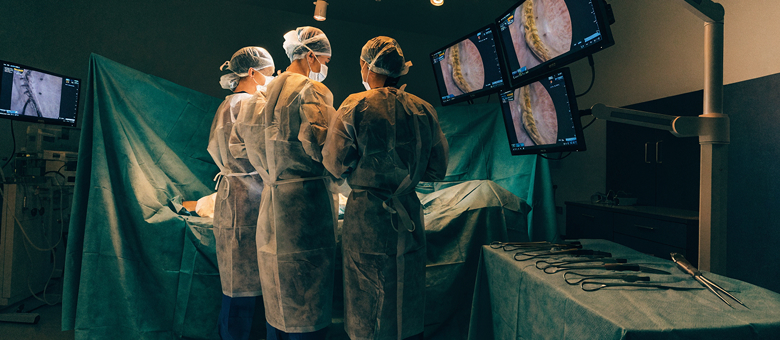
What is keyhole spine surgery?
Keyhole (minimally invasive) spine surgery treats spinal conditions through incisions typically under two centimetres, using specialised instruments and imaging guidance. Compared with traditional open surgery it means less muscle disruption, reduced blood loss, lower infection risk and a significantly faster return to normal life.
Dr Banerjee performed the first keyhole disc removal in Northamptonshire and has since built one of London’s most experienced minimally invasive spine practices, with over 150 discectomy procedures completed.
Who is it for?
- Sciatica or leg pain from a herniated (slipped) disc
- Spinal stenosis causing walking difficulty or numbness
- Nerve compression not responding to conservative care
- Patients seeking faster recovery and day-case treatment
The procedure, step by step
Anaesthetic & positioning
Performed under general anaesthetic with continuous monitoring.
Guided access
A small incision; imaging guidance directs instruments precisely to the affected level.
Targeted treatment
The disc fragment or bone compressing the nerve is removed — healthy tissue is preserved.
Closure & recovery
The incision is closed with dissolving stitches. Most patients walk the same day.
Recovery timeline
Day 0
Walk the same day; most patients home within 24 hours
Weeks 1–2
Light activity; wound care and gentle walking
Weeks 3–6
Progressive return to work and daily routines
Months 2–3
Guided return to full activity and sport
Risks & considerations
As with any surgery there are risks, including infection, bleeding, nerve injury and recurrence. Dr Banerjee will discuss these openly at consultation, alongside the likelihood of success for your specific condition. Surgery is only recommended when clearly indicated by objective findings — and outcomes are never guaranteed.